Jan van IJken

Tag: Documentary

  • Becoming Bird

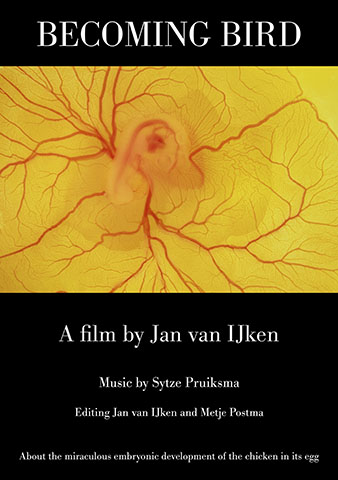
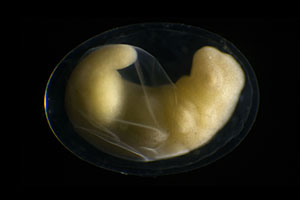
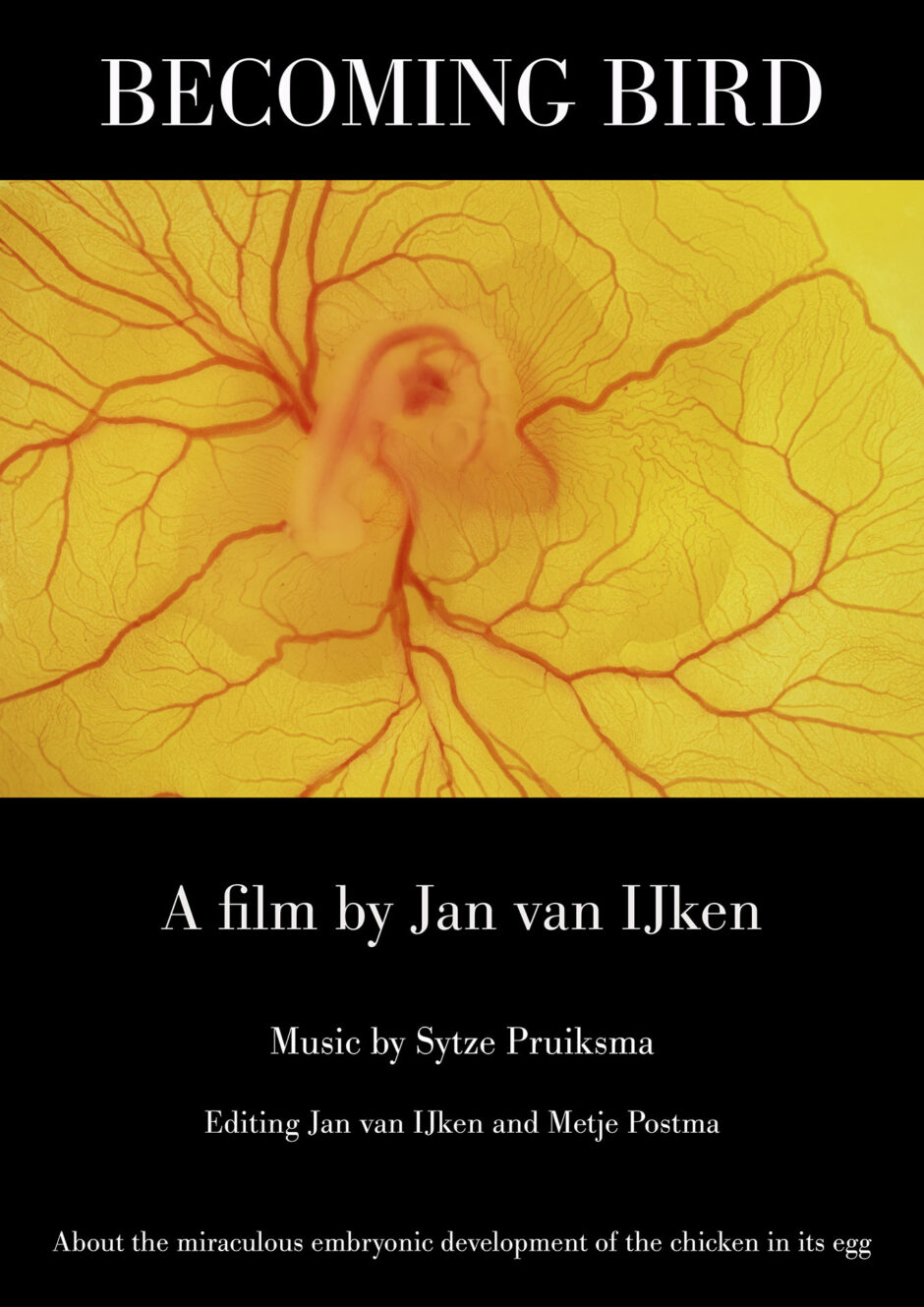
    Becoming Bird is a short film about the miraculous embryonic development of a chicken inside its egg, from fertilized egg cell to hatching. In the film, we observe the developing embryo in remarkable detail: the appearance of veins carrying streaming blood and a beating heart, the development of the brain, eyes and other organs, the embryo’s first movements, the emergence of feathers, and finally the hatching of the chick. It is an emotional journey, filmed by Jan van IJken with extraordinary precision and detail.

    Eggs and chickens are consumed all over the world, yet few people have witnessed the miracle of life unfolding inside an ordinary egg. The embryonic development normally takes 21 days, but in the film this process is condensed to nine minutes through the use of time-lapse photography and filming.

    Stay tuned for more news about the release of the film.

    Becoming Bird (2026, 4K, color, 09:20)

    Filmed, directed and produced by Jan van IJken
    Edited by Jan van IJken and Metje Postma
    Music by Sytze Pruiksma
    Audio Mix by Harry Zwerver
    With the generous support of HatchTech Group and Hatchery Beunder

  • Jan van IJken is a filmmaker and photographer from the Netherlands, working at the interface of art and science.

    His work is about the secrets of nature, microscopy, embryology and human-animal relationships.

  • Planktonium Live at IDFA Shaping Bonds, Amsterdam 21th March 2026

    Planktonium Live is a voyage of discovery to a secret universe, a live performance with the smallest organisms playing the leading role. For Shaping Bonds Dutch photographer and filmmaker Jan van IJken collaborates with composer and clarinetist Jaime Peña whose work explores the poetic potential of everyday sound. Together they create a total experience that immerses the audience in the images and sounds of an underwater world that goes beyond the natural boundaries of our senses.

    Microscopic images of various species of plankton show an assortment of rotating, crawling, spinning and dancing objects, in all shapes and sizes. Are they molluscs emitting light signals, or are they spaceships, gemstones, human cells? Their beauty appears extraterrestrial, but they are vital to our planet: plankton produces half of all the oxygen on Earth, absorbs large quantities of CO2 and forms the beginning of the food chain. It is now threatened by rising temperatures and ocean acidification.

    Hert Documentaire Paviljoen / De Spiegel, Vondelpark Amsterdam

    21th March 2026            19:30-20:15

    Tickets

    Planktonium – Short film and photo series about the unseen world of living microscopic plankton Developing egg of the tunicate Ciona Photo Jan van IJken

  • 1st Prize Microscopy Today Micrograph Awards competition 2024

    I am very happy that my photo won the 1st prize in the 2024 Microscopy Today Micrograph Awards competition. Another picture ended as Finalist.

    The premise of the micrograph competition is that scientific images can be interesting and have significant visual impact. This year, submissions came from 21 countries and 17 US states.

    Open Category 1st Prize.
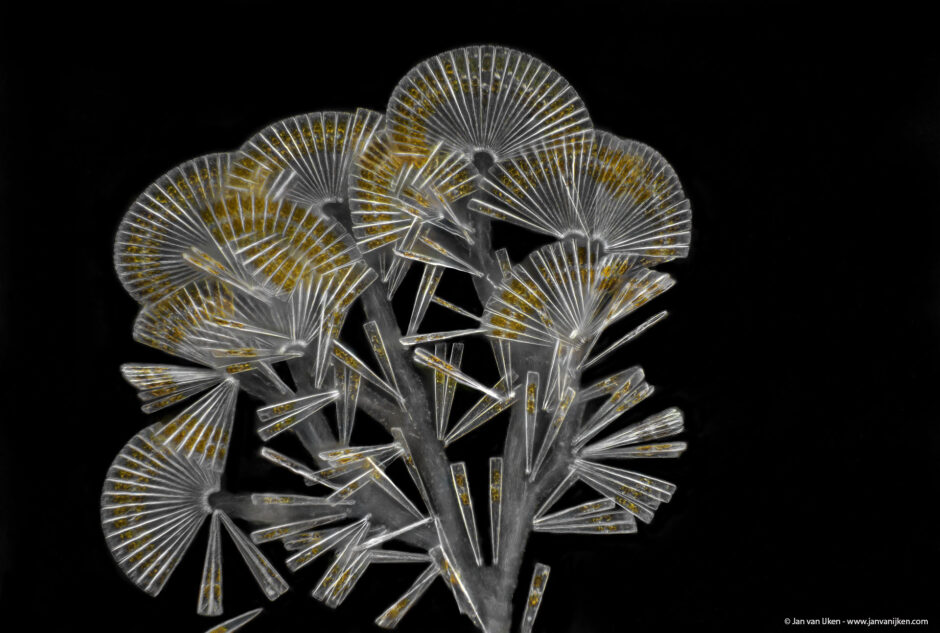
    Colonial diatoms. Phytoplankton Licmophora flabellata are colonial diatoms. Phytoplankton produces around 50% of all oxygen on earth by photosynthesis, and plankton play an essential role in the global carbon cycle (light microscopy). Image by Jan van IJken, Leiden, Netherlands.

    Open Category, Finalist
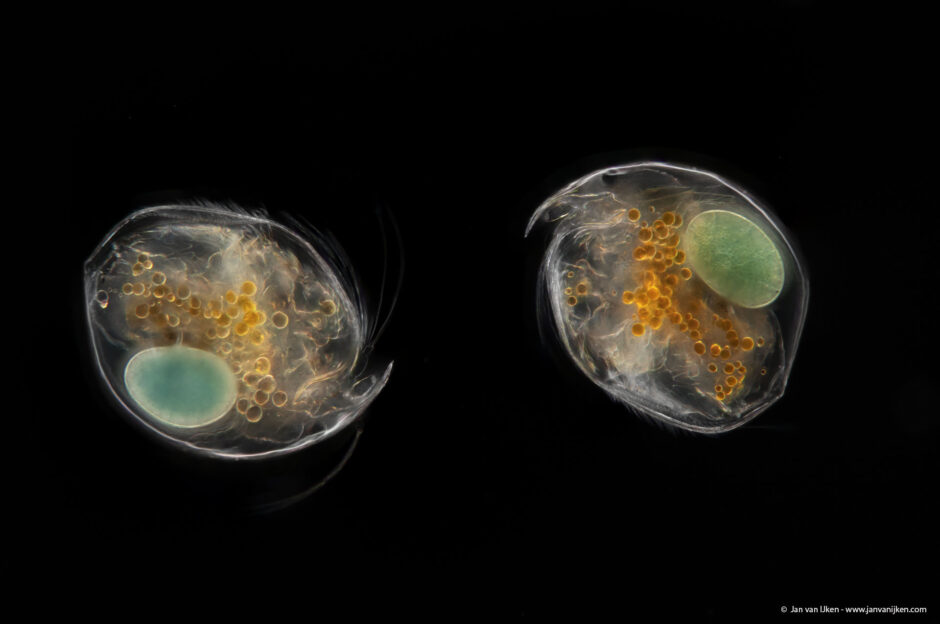
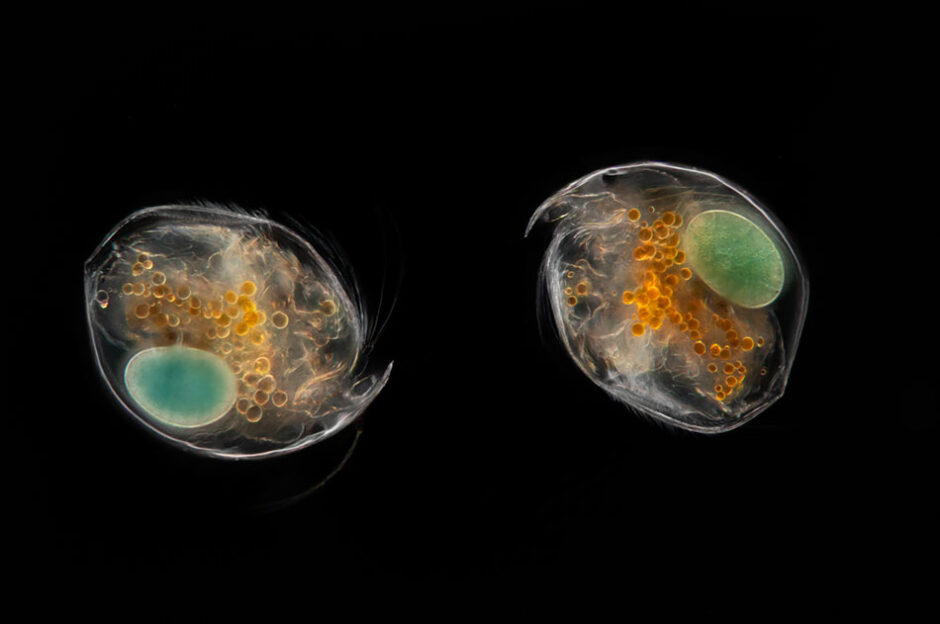
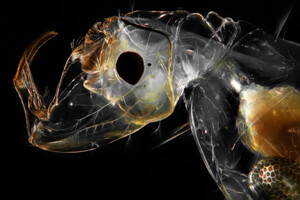
    Water flea Chydorus sphaericus carrying an egg. Light microscopy. Image by Jan van IJken, Leiden, Netherlands

    https://academic.oup.com/mt/article/32/5/14/7774337


  • Species List Planktonium

    Species List Planktonium (both full and short version)

    full 15 min version:

    00:14 Coscinodiscus – Diatoms

    00:22 Coscinodiscus – Diatoms

    00:30 Coscinodiscus – Diatoms

    00:38 Coscinodiscus – Diatom

    00:46 Actinosphaerium (heliozoan)

    01:03 Bacillaria Paxillifer – Diatoms

    01:18 Bacillaria Paxillifer – Diatoms

    01:44 Heliozoea

    01:59 Medusa stage of Obelia

    02:15 Testate amoeba

    02:28 Developing egg of unknown species

    02:42 Noctiluca scintillans (sea sparkle)

    02:55 Noctiluca scintillans (sea sparkle)

    03:07 Testate amoeba

    03:21 Heliozoean releasing a ciliate

    03:49 Dinoflagellates

    04:09 Volvox

    04:28 Euglena

    04:44 Micrasterias (desmid)

    04:45 Tube dwelling diatoms

    05:05 Tube dwelling diatoms

    05:18 Tube dwelling diatoms

    05:34 Dinoflagellates

    05:48 Colonial Peritrich – Ciliates

    06:00 Colonial Peritrich – Ciliates

    06:11 Conochilus – Colonial rotifers

    06:19 Conochilus – Colonial rotifers

    06:28 Rotifers

    06:41 Asplanchna – Rotifers

    06:52 Rotifer

    07:00 Rotifers

    07:12 Brachionus – Rotifers

    07:25 Kellicottia – Rotifers

    07:36 Echinoderm larva

    07:50 Echinoderm larva

    08:08 Ciliates

    08:22 Ciliate

    08:31 Nassula – Ciliate

    08:49 Lithodesmium intricatum (diatom)

    09:02 Ditylum brightwelli (diatom)

    09:11 Larva of a tube-dwelling worm

    09:20 Larva of a tube-dwelling worm

    09:27 Eleutheria dichotoma (hydroid)

    09:40 Hydra

    09:59 Chaoborus (phantom midge larva)

    10:06 Chaoborus (phantom midge larva)

    10:12 Polyphemus pediculus – Water flea (giving birth)

    10:56 Cyclops (copepod with diatoms attached)

    11:12 Daphnia pulex – Water flea carrying eggs

    11:21 Diaphanosoma – water flea carrying embryos

    11:27 Diaphanosoma – water flea carrying embryos

    11:36 Ilyocryptus (water flea)

    11:46 Sea star larva

    11:56 Tunica larva (Oikopleuridae)

    12:11 Crab larva

    12:19 Veliger larva

    12:26 Planktonic trochophore stage of the larva of a polychaete worm

    12:42 Mnemiopsis leidyi (comb jelly)

    13:06 Radiolaria

    13:19 Stentor amethystinus

    13:37 Stentor amethystinus

    Planktonium – 3 min version:

    00:01 Coscinodiscus – Diatoms

    00:08 Coscinodiscus – Diatoms

    00:16 Coscinodiscus – Diatom

    00:24 Bacillaria Paxillifer – Diatoms

    00:39 Heliozoean

    00:56 Nassula – Ciliate

    01:14 Dinoflagellates

    01:28 Larva of a tube-dwelling worm

    01:43 Eleutheria dichotoma (hydroid)

    01:57 Diaphanosoma brachyurum – water flea carrying embryos

    02:04 Diaphanosoma brachyurum – water flea carrying embryos

    02:12 Echinoderm larva

    02:24 Veliger larva

    02:32 Planktonic trochophore stage of the larva of a polychaete worm
  • Limited Edition Collectors Box Planktonium – SOLD OUT

    To celebrate the release of my film Planktonium, I decided to produce a Limited Edition Collectors Box (35 copies only!) of the project.

    This numbered (35/35) Box is containing:

    3 signed and numbered inkjetprints on Hahnemühle Photo Rag baryta (315 gsm) A4 size paper, printed by Hans Bol
    Full version of the short film Planktonium (15:23) + extra footage (02:00) in 4K and HD format on USB stick
    An essay on plankton by Jelle Reumer, text design by Karin van der Meer
    Handmade Box by Liesbeth Visser, including an extra photo on the front

    The price is € 295,00 including 9% VAT, excluding cost of shipment.

    Produced with generous financial support of Nederlands Filmfonds, Gemeente Leiden and Stichting Oog op de Natuur

  • Planktonium

    Chydorus sphaericus (water fleas carrying egg)

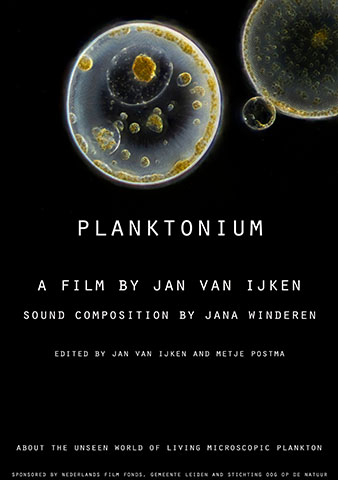
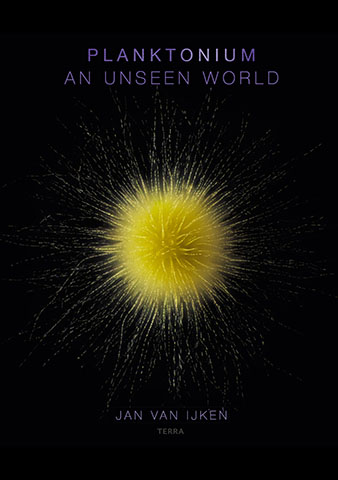
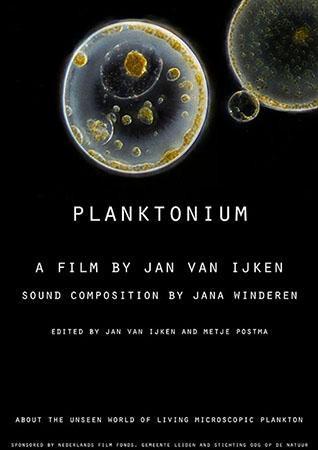
    Planktonium is a short film about the unseen world of living microscopic plankton. It is a voyage into a secret universe, inhabited by alien-like creatures. These stunningly beautiful, very diverse and numerous organisms are unknown to most of us because they are invisible to the naked eye. However, they are wandering beneath the surface of all waters around us and they are of vital importance for all life on earth.

    Jan van IJken filmed the plankton through his microscopes, revealing the beauty and delicate structures of the minute organisms in the finest detail. The film is without any voice-over or explanation.

    Renowned Norwegian artist Jana Winderen made a sound composition for the film. She is recording audio environments and creatures which are hard for humans to access, both physically and aurally – deep under water, inside ice or in frequency ranges inaudible to the human ear.

    Phytoplankton (small plant-like cells) are producing half of all oxygen on earth by photosynthesis, like plants and trees do on land. Zooplankton (animal-like critters) are eating the phytoplankton, and are on the menu of larger animals in the water. So plankton is forming the base of the food chain of aquatic life. Plankton are also playing an important part in the global carbon cycle. The plankton are threatened by climate change, global warming and acidification of the oceans.

    Filmed, directed and produced by Jan van IJken
    Sound composition by Jana Winderen
    Edited by Jan van IJken and Metje Postma

    Produced with generous financial support of Gemeente Leiden, Stichting Oog op de Natuur and The Netherlands Film Fund.

    2021, 4K, color, 15:23 min

    Buy or rent Planktonium (full version)

    Planktonium had its world premiere at Ji.hlava Documentary Film Festival, CZ and was screened at many international film festivals and art galleries:

    List of Screenings and Awards

    The Dutch Museum De Lakenhal in Leiden acquired one copy of the short film Planktonium for its collection and the film has been part of Leiden European City of Science 2022 program.

    The film received the J. B. CZECZ AWARD FOR BEST CINEMATOGRAPHY at Włodzimierz Puchalski International Nature Film Festival, Łódź, PL 2022

    A short sequence of plankton footage was featured in BBC Planet Earth III, Ocean Episode, narrated by Sir David Attenborough.
    https://www.bbc.co.uk/programmes/articles/5mkz46vC74JXyMq4F1rMsP7/plankton-an-unseen-universe

    In 2024, I was invited to take part in an epic journey to film plankton at the North Pole onboard of the luxury icebreaker Le Commandant Charcot for National Geographic’s Pole to Pole series with Will Smith and Allison Fong.

    https://www.natgeotv.com/nl/programmas/natgeo/pole-to-pole-with-will-smith

    Planktonium Live Performances

    In these live performances, I am screening plankton videos, improvising with musicians and sound artists.

    2025 Inscience Film Festival, Nijmegen, NL (2 performances, with John van Oostrum)
    2025 Mu Hybrid Art House, Eindhoven, NL (with John van Oostrum)
    2024 IDFA on Stage, Eye Filmmuseum Cinema 1 (with Jana Winderen)
    2024 Kunstroute, Auditorium Museum De Lakenhal (with John van Oostrum)
    2024 Glastonbury Festival, Tree Stage, UK (with Steve Everitt / Entity)
    2024 International Film Festival Rotterdam, Art Directions program, Worm, NL (with Vitja Pauwels)
    2023 ‘O’ / Videodroom for Viernulvier & Film Fest Gent, De Vooruit, Gent, BE
    (with musicians Naima Joris, Niels van Heertum and Vitja Pauwels)

    Director Statement

    Publications

    Species List Planktonium

    Planktonium in the Auditorium of Museum De Lakenhal in Leiden, NL (2022)
  • Waterland

    ‘Streekfonds Waterland’ commissioned me to produce several short films about the stunning beauty of this natural area, just north of Amsterdam. Here are some examples of the results (unfortunately no English subtitles):

    https://vimeo.com/190281354

  • Planktonium photobook

    Planktonium is a short film and photo project by Jan van IJken about the unseen world of living microscopic plankton. It is a voyage into a secret universe, inhabited by alien-like creatures. These stunningly beautiful, very diverse and numerous organisms are unknown to most of us because they are invisible to the naked eye. However, they are wandering beneath the surface of all waters around us and they are of vital importance for all life on earth.

    Jan van IJken photographed the plankton through his microscopes, revealing the beauty and delicate structures of the minute organisms in the finest detail.

    Phytoplankton (small plant-like cells) are producing half of all oxygen on earth by photosynthesis, like plants and trees do on land. Zooplankton (animal-like critters) are eating the phytoplankton, and are on the menu of larger animals in the water. So plankton is forming the base of the food chain of aquatic life. Plankton are also playing an important part in the global carbon cycle. The plankton are threatened by climate change, global warming and acidification of the oceans.

    Produced with generous financial support of Gemeente Leiden and Stichting Oog op de Natuur.

    Preview of some selected photos:

  • The art of flying

    The art of flying

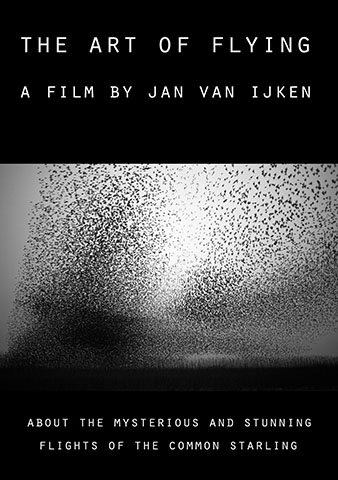
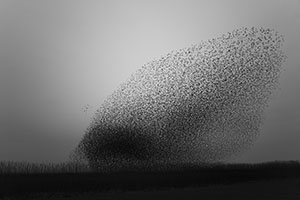
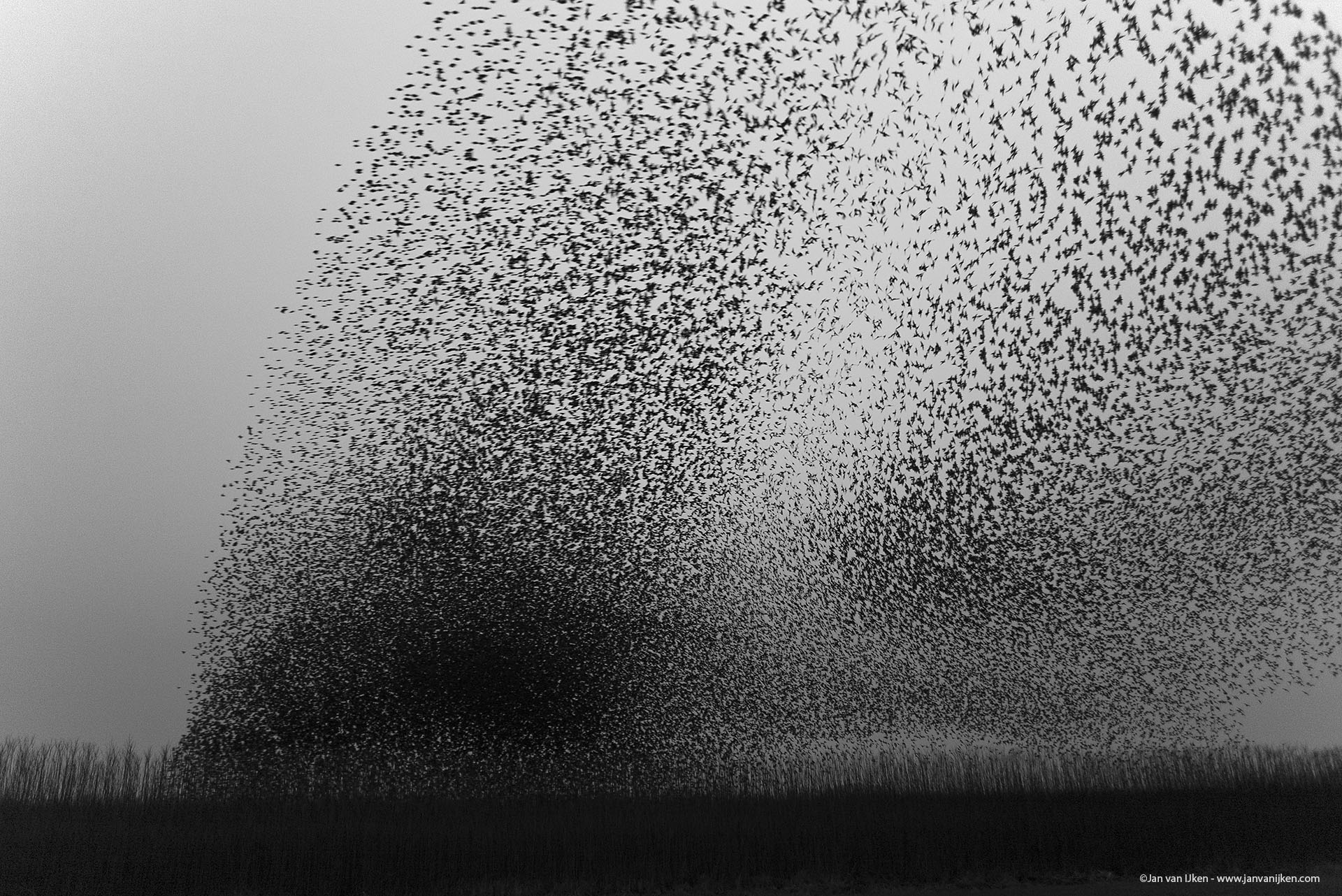
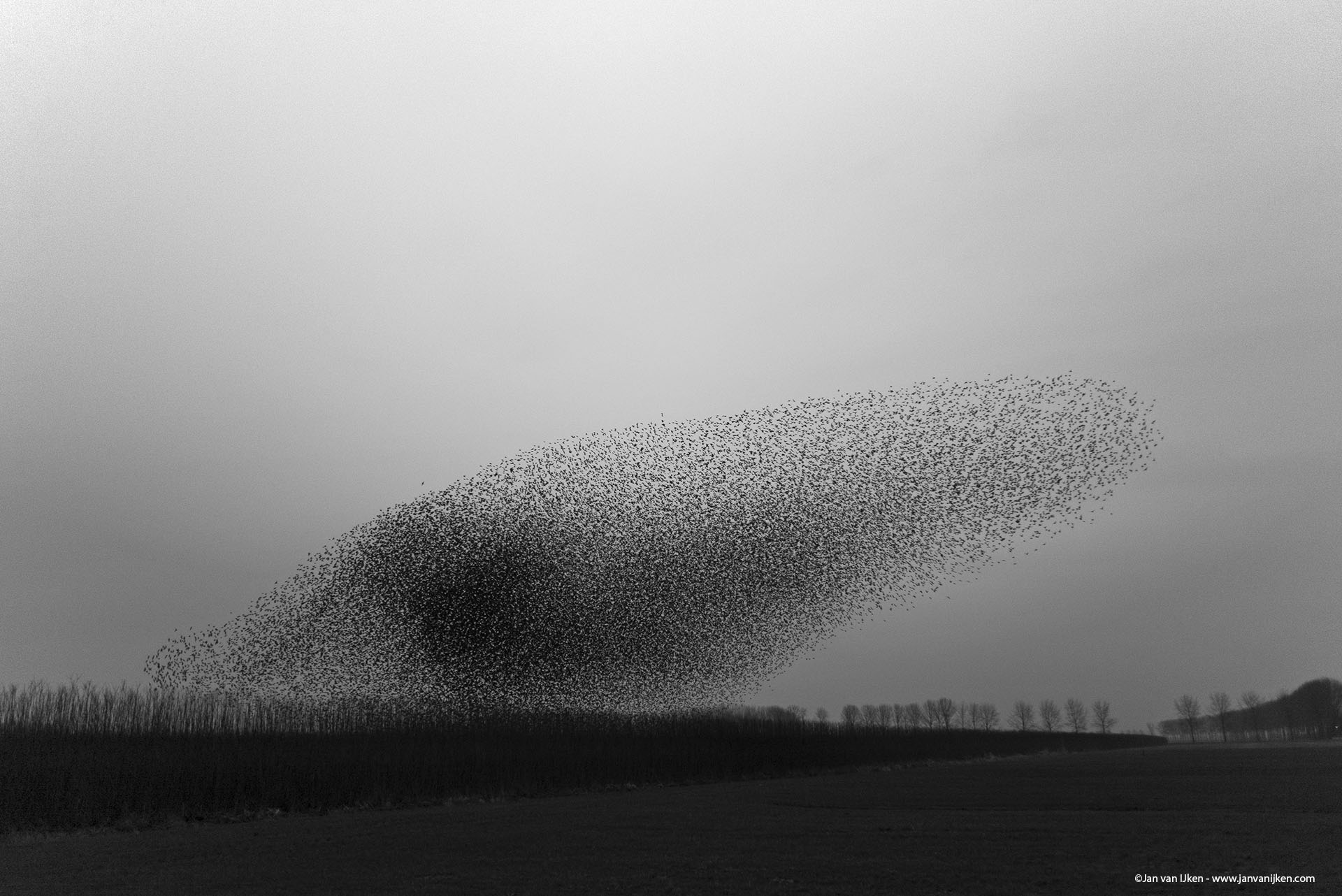
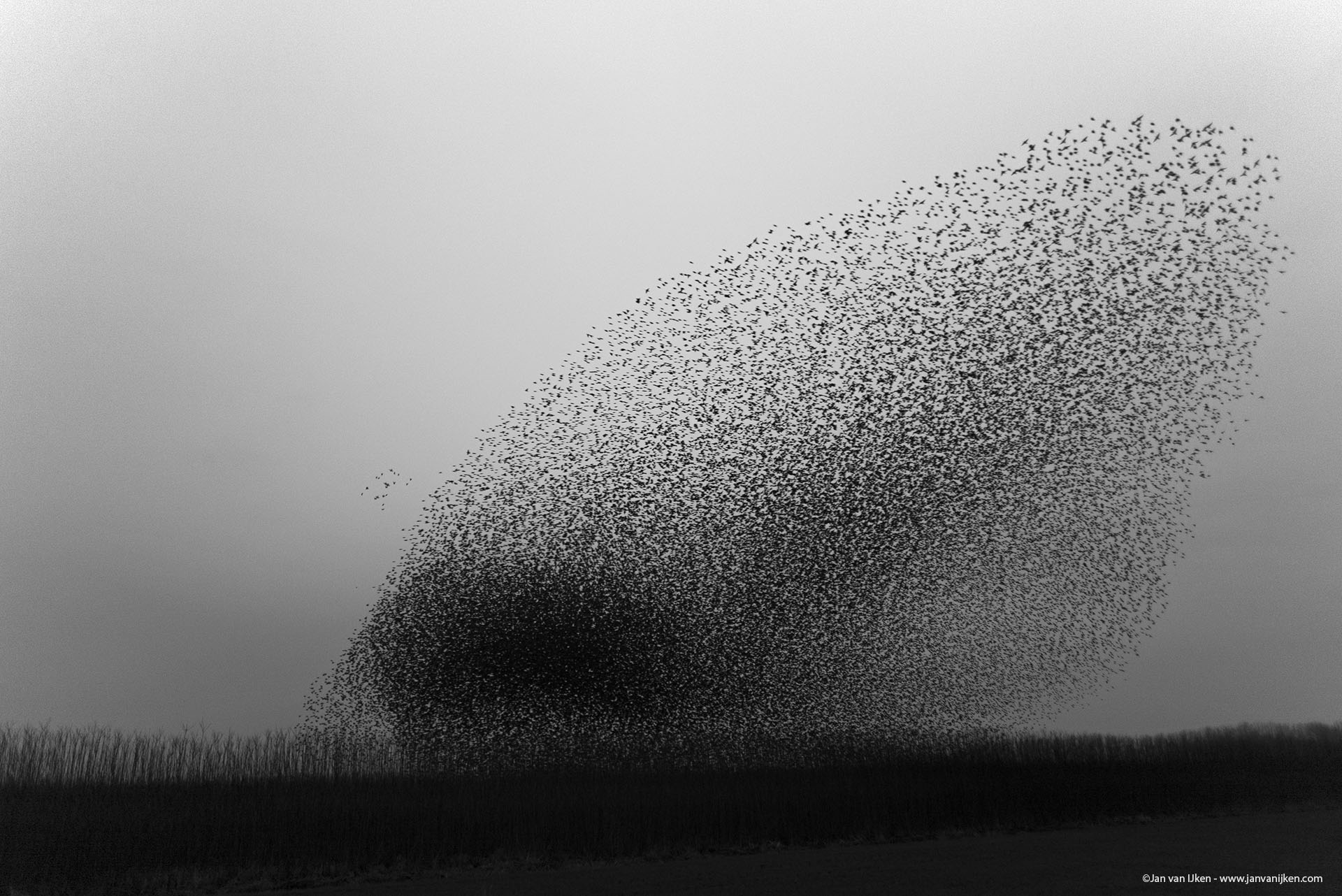
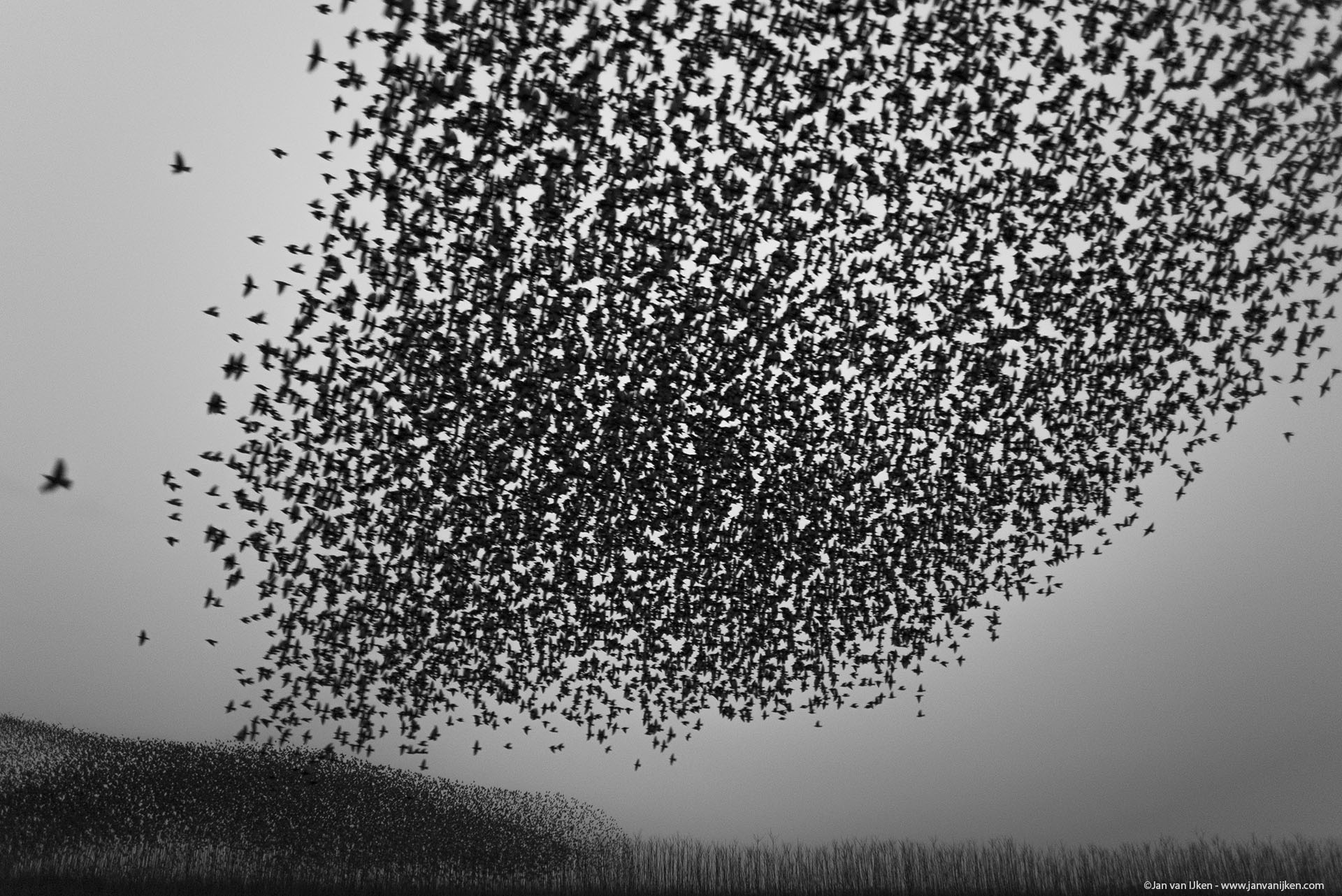
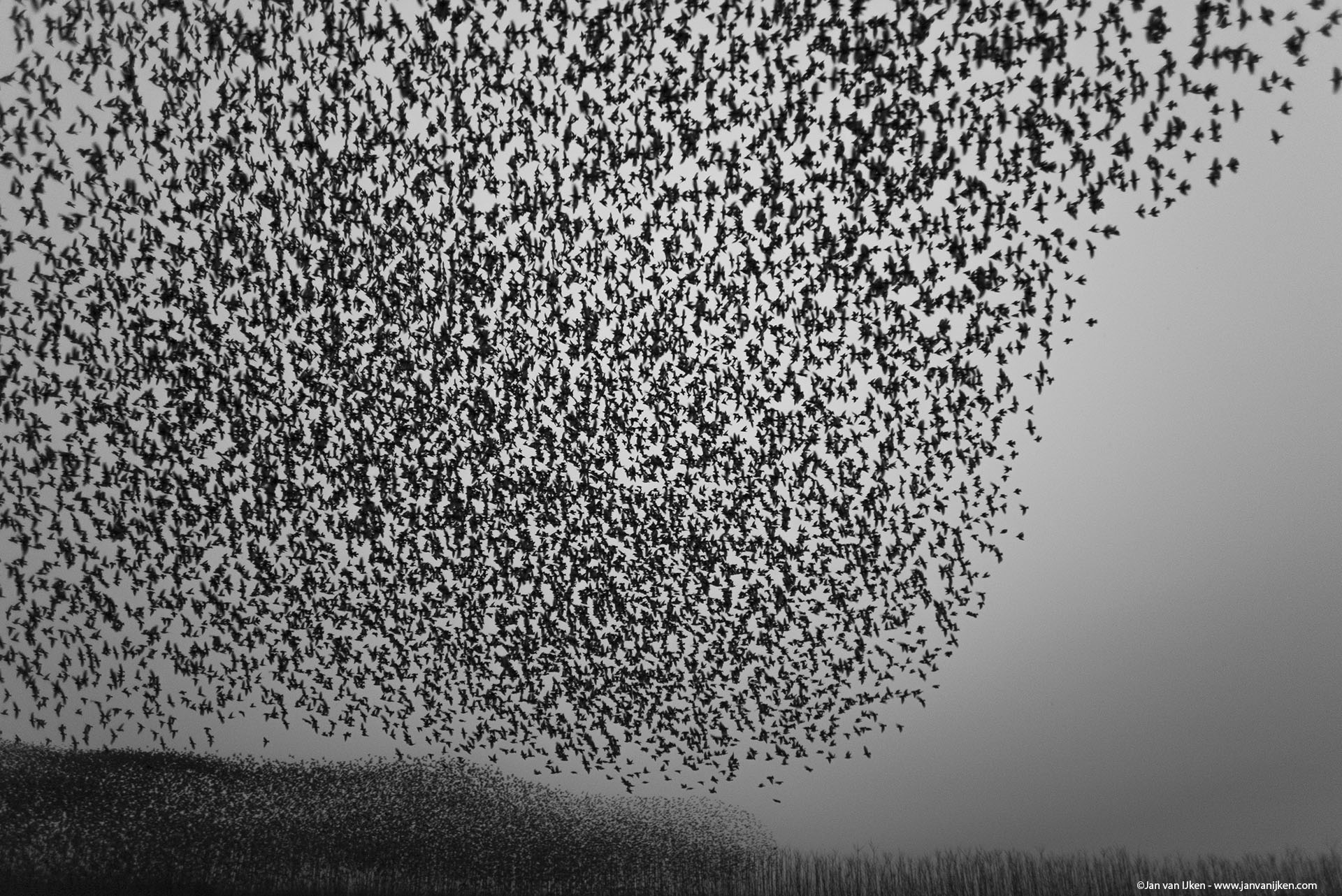
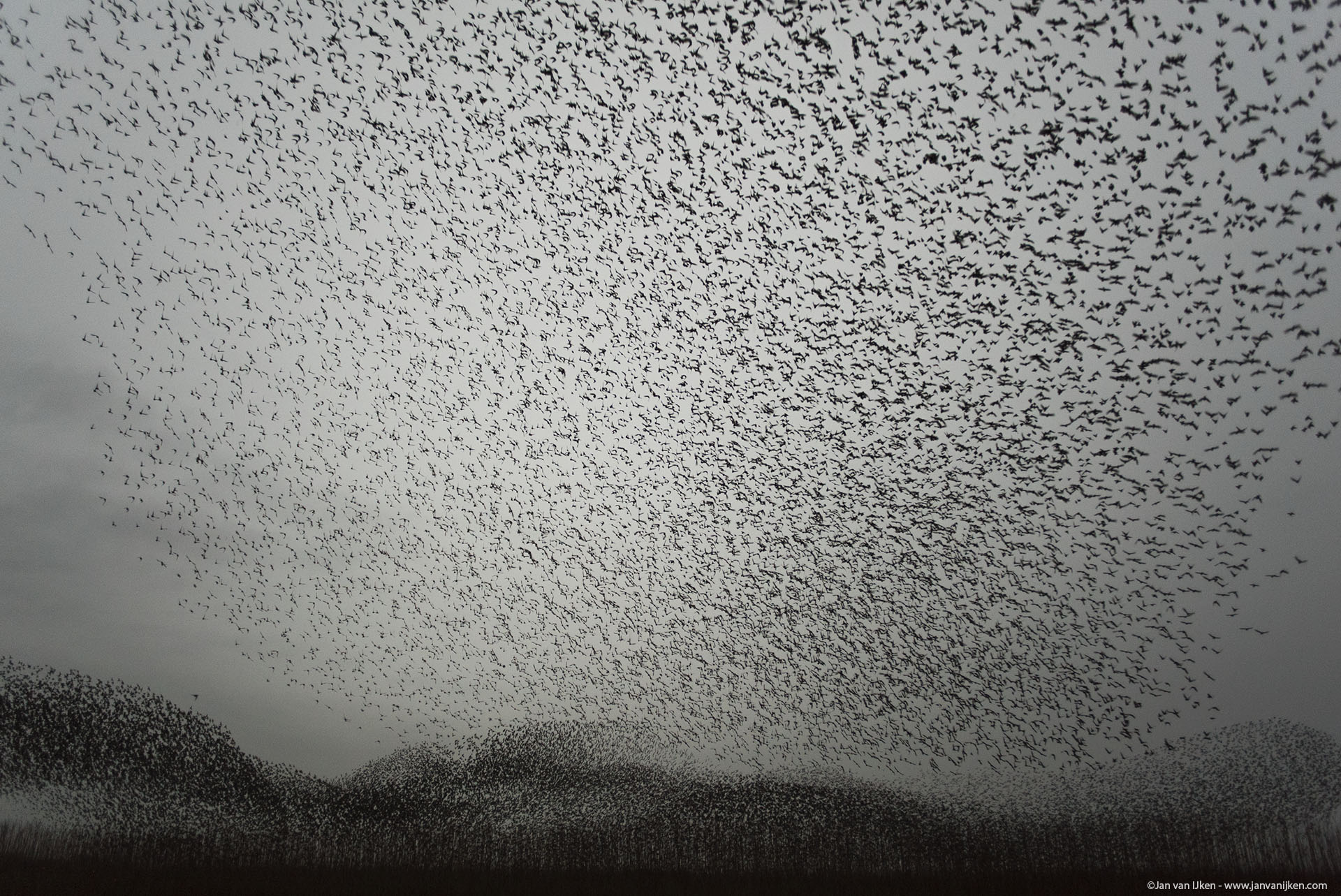
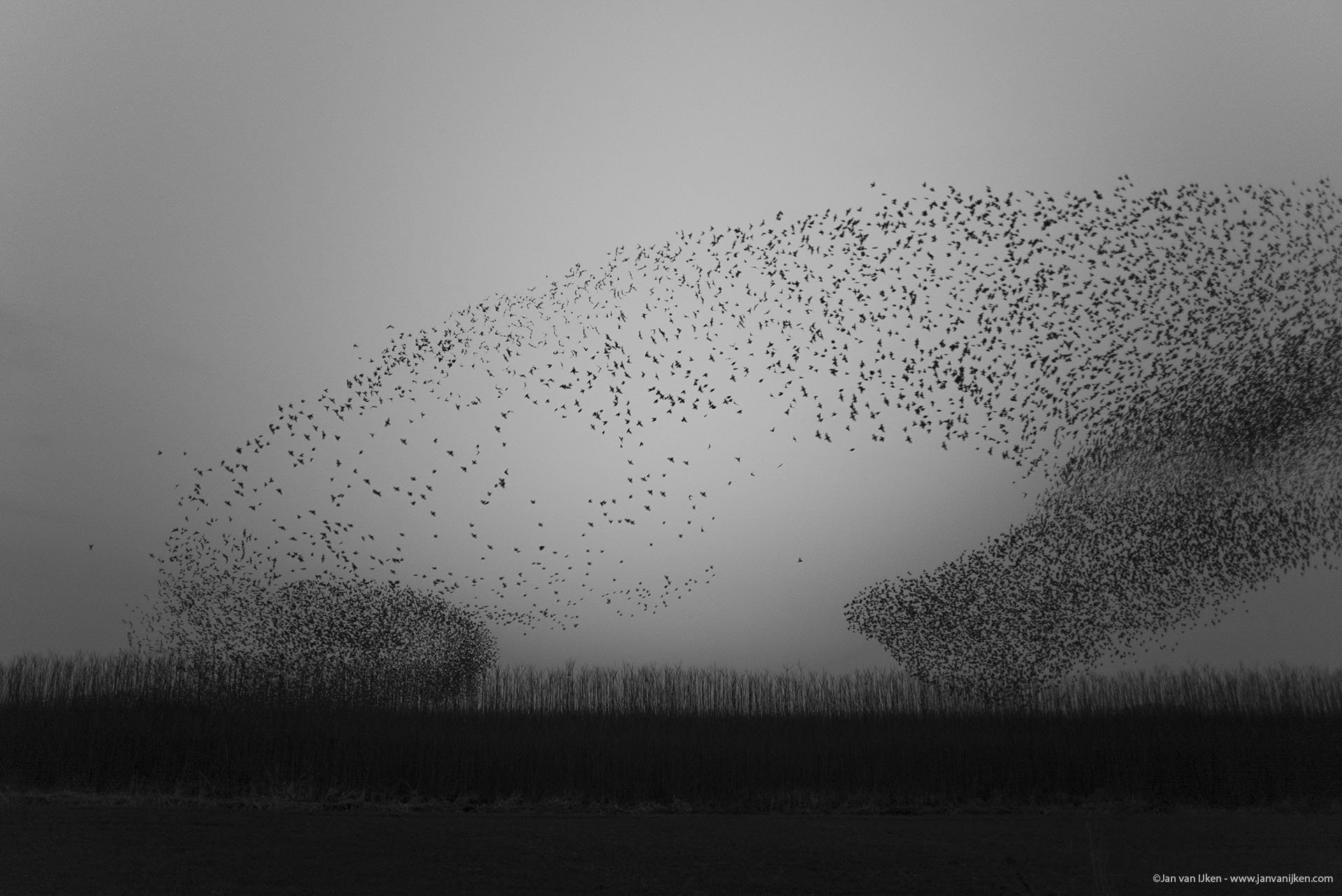
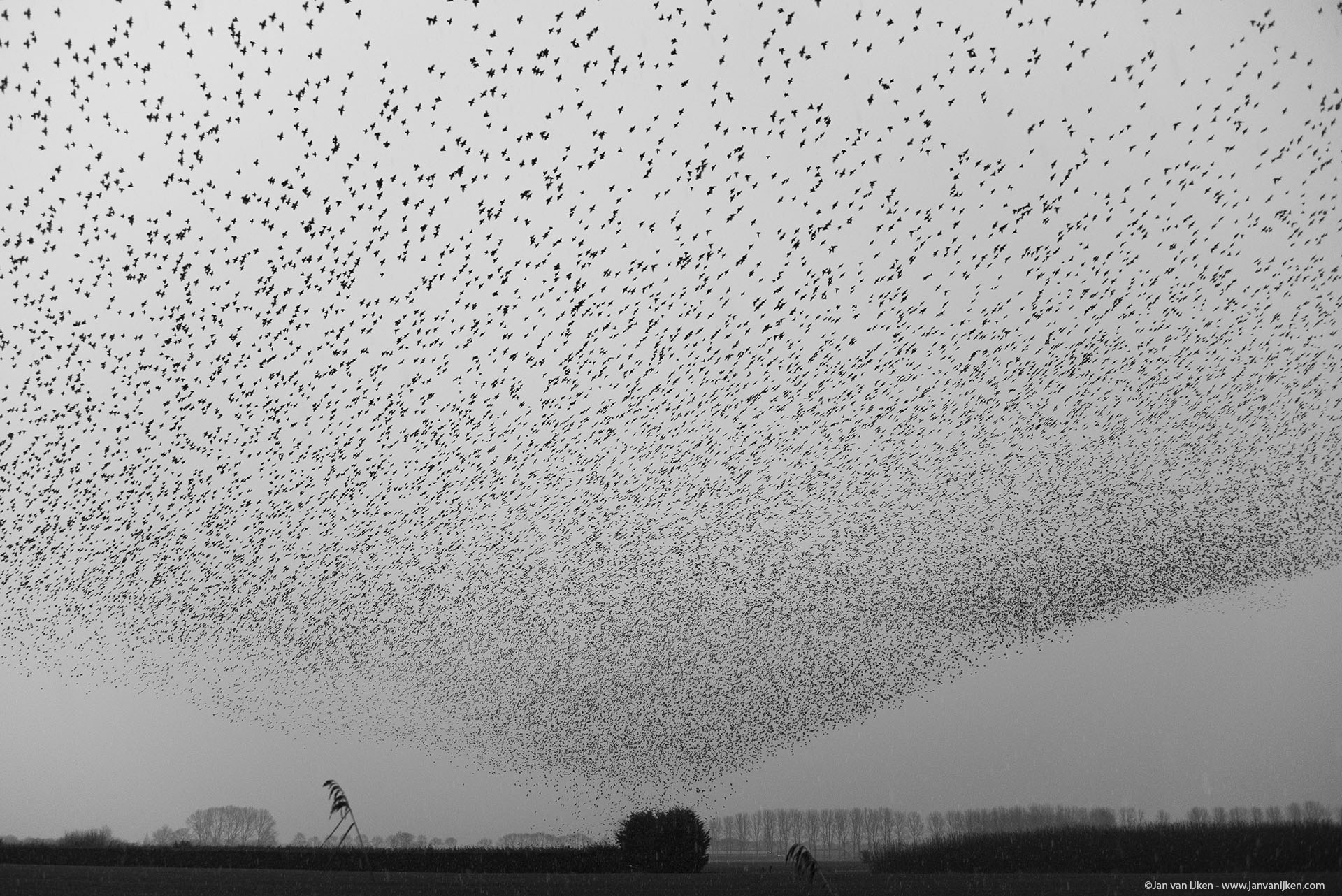
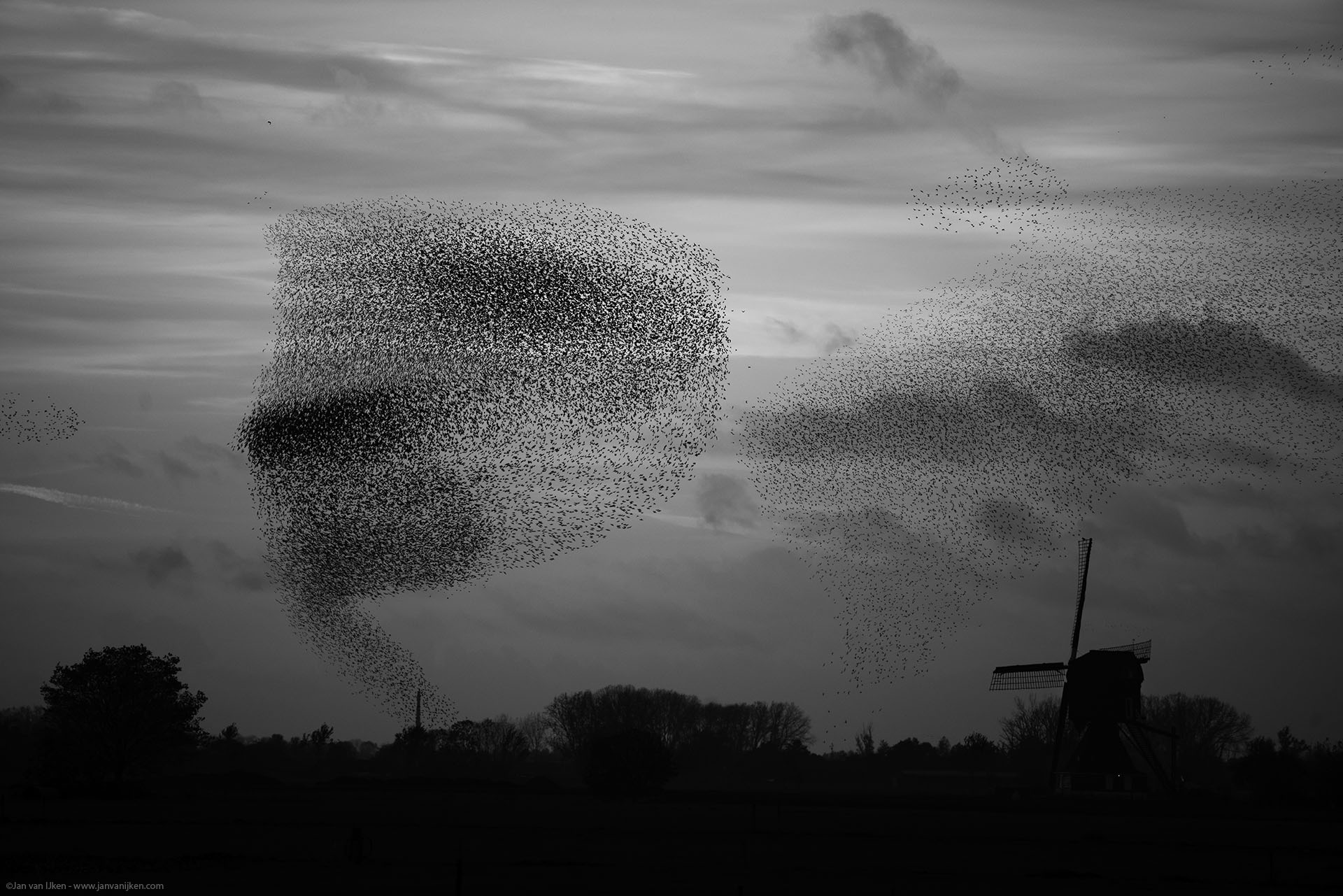
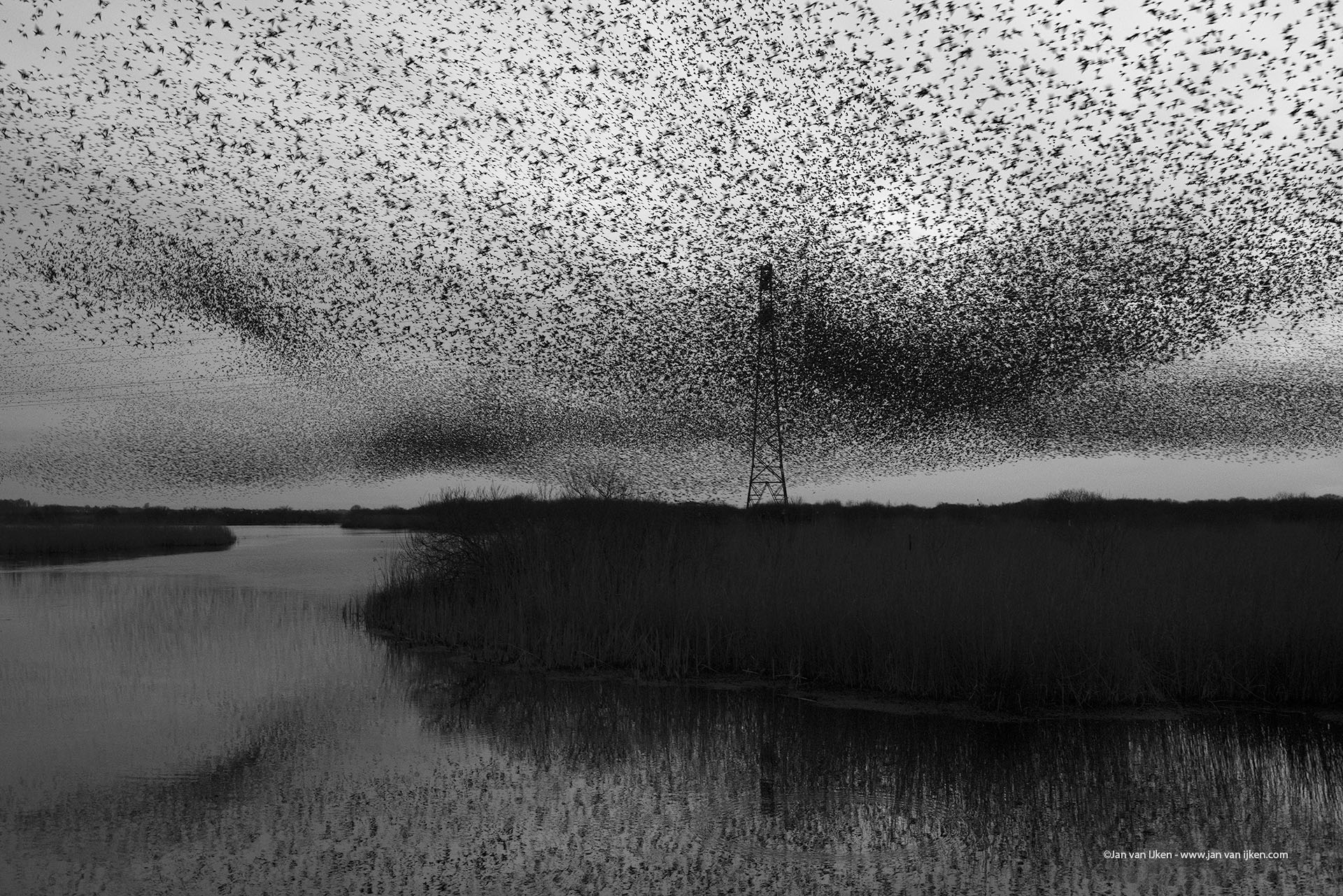
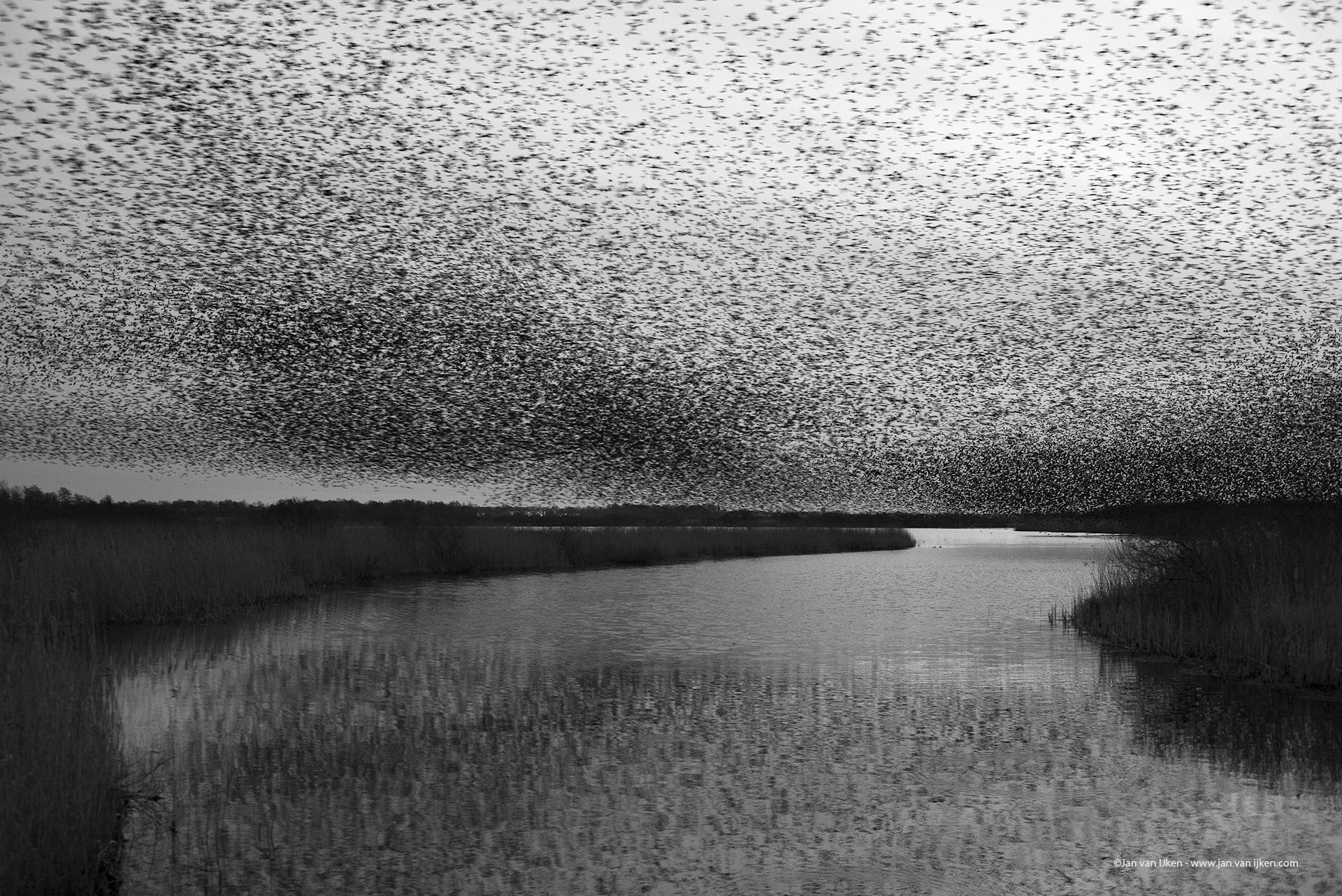
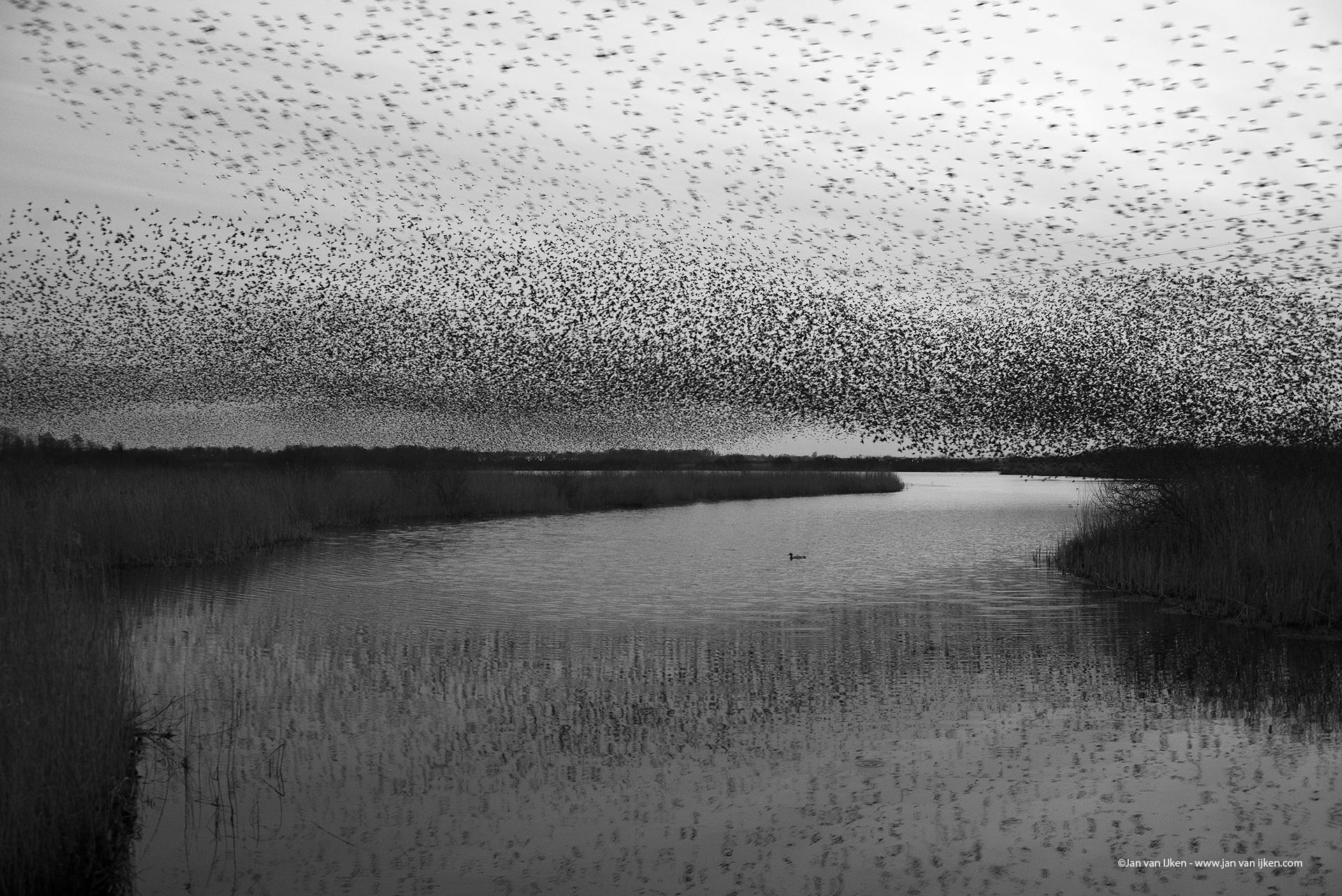
    Short film about “murmurations”: the mysterious flights of the Common Starling. It is still unknown how the thousands of birds are able to fly in such dense swarms without colliding. Every night the starlings gather at dusk to perform their stunning air show.

    Because of the relatively warm winter of 2014/2015, the starlings stayed in the Netherlands instead of migrating southwards. This gave filmmaker Jan van IJken the opportunity to film one of the most spectacular and amazing natural phenomena on earth.

    2015, HD Video, black&white, 06:52

    The film has been screened at more than 50 international film festivals, art galleries, museums, etc. It was awarded “Best art film” at Pärnu Int. Documentary Film Festival, Estonia. The short 2 min version of the film was published online by National Geographic’s Short Film Showcase and was selected as a Vimeo Staff Pick.

    List of screenings & awards THE ART OF FLYING

    Link to the photoseries The art of flying:
    https://www.janvanijken.com/the-art-of-flying/

  • Becoming

    SYNOPSIS

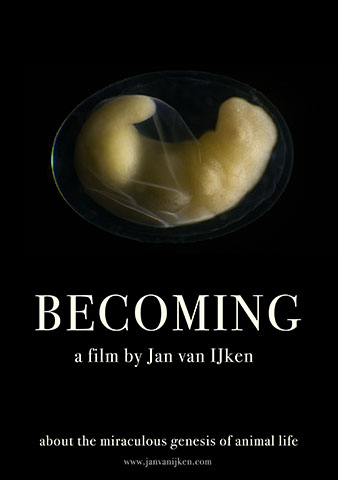
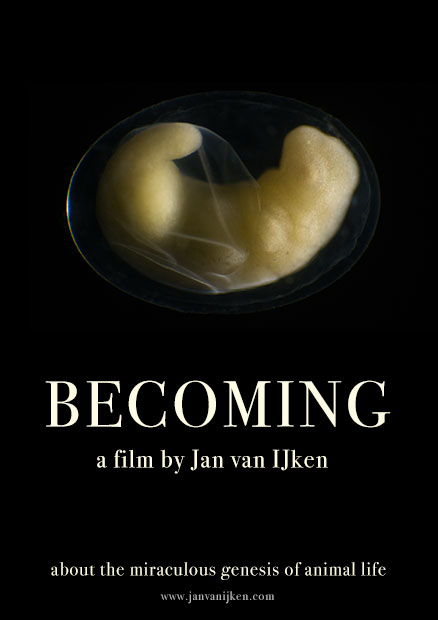
    Becoming is short film by Jan van IJken about the embryology of a salamander. In this film we witness the ‘making of’ a salamander in its transparent egg from fertilization to hatching, filmed in great microscopic detail.

    The first stages of embryonic development are roughly the same for all animals, including humans. In the film, we can observe a universal process which normally is invisible: the miraculous genesis of animal life. A single cell is transformed into a complete, complex living organism with a beating heart and running bloodstream.

    The salamander embryo (an Ichthyosaura Alpestris) was followed very closely in a combination of timelapse and film. All stages of embryogenesis can be seen in this film: cleavage, gastrulation, neurulation and organogenesis. Time was condensed from about 3 weeks to 6 minutes.

    2018, HD video, color, 06:15

    SCREENINGS AND AWARDS

    Becoming has been screened at more than 25 international film festivals and received the Award for best short documentary at the Innsbruck nature film festival 2018, the Visual Science Award at Imagine Science Abu Dhabi 2019 and a honorary mention at Academia Film, Olomouc, CZ. The film was awarded Vimeo Staff Pick of the Month and was nominated for Vimeo Best of 2019 (top 10 experimental films).

    In 2019 the film went ‘viral’ on internet and has been watched by millions of people. It was published on the website of National Geographic (13 million views and counting), Aeon, Colossal, Live Science, IFLScience and numerous others. The Dutch TV show De Wereld Draait Door screened the film, including an interview.

    FULL LIST OF SCREENINGS AND AWARDS BECOMING

    Acknowledgements; Many thanks to:
    Alex Kenter salamander breeder with endless patience in providing eggs.
    Ben Geutskens for sharing his knowledge about the biology and life cycles of salamanders: http://www.semperinmotus.nl/
    My friends at the Dutch microscopy club NGVM: http://www.ngvm.nl 
    Huibert Boon for the audimix and foley http://www.boonbooy.nl/

  • Jan van IJken

    Jan van IJken is a filmmaker and photographer from the Netherlands, working at the interface of art and science.
    His work is about the secrets of nature, microscopy, embryology and human-animal relationships.

  • The art of flying

    Photoseries about “murmurations”: the mysterious flights of the Common Starling. It is still unknown how the thousands of birds are able to fly in such dense swarms without colliding. Every night the starlings gather at dusk to perform their stunning air show.

    Because of the relatively warm winter of 2014/2015, the starlings stayed in the Netherlands instead of migrating southwards. This gave filmmaker Jan van IJken the opportunity to film one of the most spectacular and amazing natural phenomena on earth.

  • Nevermore

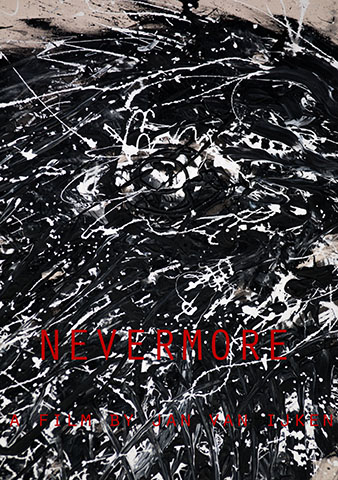
    Film about the fast and almost instinctive creative process of action painting by dribbling, splashing, scratching and smearing paint on a huge canvas. The work is based on the poem ‘The Raven’ by Edgar Allan Poe: an almost abstract chaos of words and sounds.

    Jan van IJken filmed Dutch artist Theo Zwinderman painting ‘The Raven’ and edited the film on the rhythm of a reading of the poem by George Snow.

    2013, HD Video, 03:37 min

    Screenings & Awards:

    2015 ArtMuc, München, Germany
    2013 Jihlava International Documentary Film Festial, Czech Republic
    2013 Micro Film Festival at What the Festival, USA
    2013 Pärnu International Documentary and Anthropology Film Festival, Estonia
    2013 Huesca International Film Festival, Spain: Documentary Short Film Contest (World Premiere)

  • Concert Photography

    Jan van IJken photographed numerous live-popconcerts from 1987 – 1994. This period marks the beginning of his career as a photographer. The photos were published in ‘Amersfoortse Courant’, ‘Primeur’ and ‘Oor’.


  • Semana Santa in Sevilla

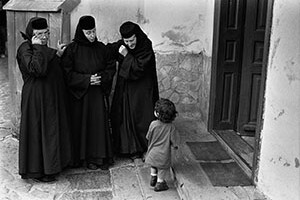
    This series was photographed in the ‘Semana Santa’: the Holy Week before Easter in Sevilla, Spain in 1995.

    Thousands of pilgrims walk for hours and hours in processions for penetention in commemoration of the passion of Jesus Christ. Jan wanted to capture the mystical, medieval atmosphere.

    The series was exhibited in the Elleboogkerk, Amersfoort and Amsterdam Centre for Photography in 1996.

  • Precious Animals

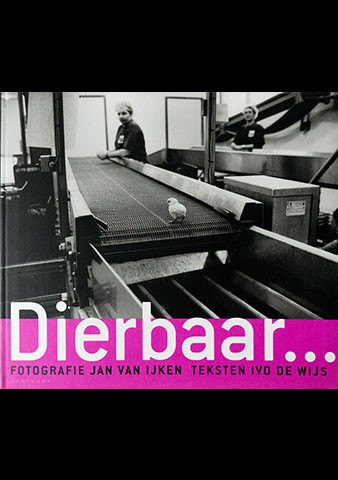
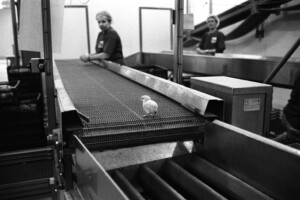
    Precious Animals (2005)  is a photo-project about the relationship between animals and humans, focusing on animals as manufactured consumer products on the one hand, with efficiency playing the leading role, and these very consumers and their habit of pampering their own pets and other cuddly two and four-legged creatures, on the other hand.

    Jan van IJken has searched for an answer to the questions ‘What is an animal’s life worth in the Netherlands?’ and ‘Why do we have animal ambulances and canine psychologists, and at the same time pen up millions of chickens with clipped beaks in a coop?’ The factory farming industry uses animals to manufacture an edible product, but animals are also used in genetic and other scientific research. However, people sometimes display a bizarre affection for their own pets or for animals in general. This results in everything from shows with ‘dolled up’ animals to workshops on cow cuddling and pet cemeteries.

    The photographer’s aim was not to pass judgement, but to incite questions about how we deal with animals in the Netherlands.

    Precious Animals was commissioned by the Rijksmuseum and NRC Handelsblad as part of their series ‘Document Nederland’. The photos were exhibited in photo museum Huis Marseille, Amsterdam from Nov 2005 – Feb 2006, along with a special supplement of NRC Handelsblad and the publication of the photobook Dierbaar.

    The series was published in many international newspapers and magazines (e.g. De Morgen, Frankfurter Allgemeine Sonntagszeitung, El Mundo Magazine, Eight, Mother Jones Magazine and Days Japan) and received a Humanity Photo Award, an International Photography Award and was selected for American Photography.

  • New Neighbours

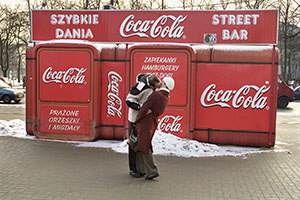
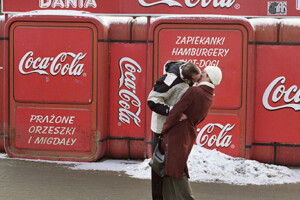
    Photo-project about daily life in five Eastern European and five Dutch municipalities. Van IJken has used the twinning of these municipalities as a starting point from which to compare everyday life in Eastern and Western Europe. People are the focus of this series of photos. The individuals who inhabit these images have been captured in all kinds of everyday situations.

    Making use of the twinning of these towns and cities enabled the photographer to take advantage of existing contacts and networks. But the most fascinating aspect of this approach is undoubtedly the comparison it generates between how people in Eastern and Western Europe live on the eve of the enlargement of the European Union.

    The reader is confronted with the question of whether the differences are really as great as is often assumed.

    The photographs were taken between May 2003 and May 2004 in the following ten municipalities:

    Amersfoort (The Netherlands) – Liberec (Czech Republic)

    Zoetermeer (The Netherlands) – Nitra (Slovakia)

    The Hague (The Netherlands) – Warsaw (Poland)

    Wageningen (The Netherlands) – Gödölö (Hungary)

    Ooststellingwerf (The Netherlands) – Ergli (Latvia).

    The series was published in the photobook ‘New Neighbours’ (2004) and was exhibited in the Atrium, The Hague, The Netherlands

  • CONTACT

    Jan van IJken Photography & Film

    Leiden, Netherlands

    Email:  info@janvanijken.com

    Photo © Ron Vink

  • Facing Animals winner ‘Project of the Month’ on Reelisor.com

    Facing Animals has been chosen as ‘Project of the Month’ on Reelisor.com, an online cooperation platform for the professional European documentary world.

    Charlie Philips, jury member and Marketplace Director of Sheffield Doc/fest:

    We’re delighted to announce the winner of the first ever Project of The Month on reelisor. The winner is Jan Van Ijken with “Facing Animals” – you can see the project here

    It’s a fascinating project with a special pitch video. An investigation into how animals see the world, it’s understated and takes the unusual tactic of literally giving us an animal’s eye view – a bit like Nicolas Philibert’s Nenette did, and this doc looks like it’ll share the non-human intensity of that one, but in Facing Animals, the tables are turned. We’re not observing the non-human animals, we are them! We’re in the chicken coop, we’re in the farmyard, we’re looking at humanity.

    It’s not simply looking like a great project because of this device, it’s also the mundanity of the scenes that we’ll get – the row of indifferent men watching, to mirror the general indifference/attitude of functionality to anything not human. in the small amount of info Jan is able to give us in his reelisor project area, you get an excellent sense of the reason this doc needs to exist and of the (enjoyably ambiguous) stance of the filmmaker.

    So well done Jan! Jan was picked from a shortlist of 10 entries, whittled down from 51 new projects added on reelisor in August and half of September (so really it was 6 weeks this time, not a month). The standard was very high.

    http://www.reelisor.com/p/facing_animals

  • Facing Animals

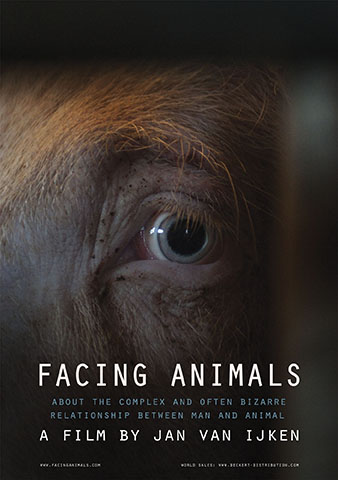
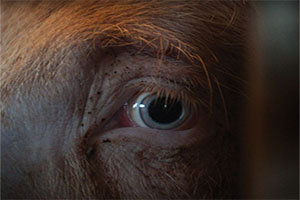
    Facing Animals (debut film of Jan van IJken) is a documentary film about the complex and often bizarre relationship between man and animal.

    Why do we look away from millions of animals in industrial farms while pampering and humanizing others? In the film Facing Animals pigs, chickens, cows and dogs are the protagonists, humans are the antagonist.

    We see the world from the perspective of the animals: chicks are thrown onto a conveyor belt, a lady is cuddling a cow in a meadow, piglets are screaming while their tails are cut off, dogs are blessed in a church.

    The stunning, often confronting, visuals take the viewer on a roller coaster of emotions. It becomes clear how complex and often bizarre the relationship between man and animal is.

    2012, HD Video, color, 29:31

    Facing Animals was screened at more than 15 international film festivals and received the Grand Prix for short films at Split Film Festival, Croatia.

    Buy or rent Facing Animals

    List of screenings and awards Facing Animals

    Director’s Statement

  • PHOTOGRAPHY